Occupy Faith

Occupy Faith
Click thru to site

LECTIONARY

LECTIONARY
Click thru to site
Showing posts with label Narrative. Show all posts

Tuesday, December 27, 2011

Children bearing the cost of politics and war: the Holy Innocents and a Peace Procession

Amplify

Many Christians think that Jesus did not enter into the political fray. No disparaging name-calling for him.  I can't stand the "Gentle Jesus meek and mild" version of Christianity, particularly as portrayed in modern forms as a gentle-faced, fairish blue-eyed Jesus. The scriptures might say He was meek - but do we understand what that word means to-day?  And Jesus was certainly far from mild.  In Luke 13:32, Jesus refers to the then reigning member of the Herods as a fox.   I wonder where that view, that description came from? 
I think of a family living in Nazareth.  Like all families there are stories and "remember whens".  How huge a thing in the life of the Ben David family it must have been when Joseph and Mary, warned by an angel, fled with their young son into Egypt to escape the massacre of young children by Herod the Great (Matthew 2:13).  There they remained until there was a change in political leadership from Herod the Great to his son, Archelaus.  

When the Ben David family returned from Egypt they did not go back to Bethlehem but to Nazareth.  Even if the boy Jesus had no memory of his own regarding these events, he would have been immersed in his family's history and story.  How could a family have retold this story without making political comment or passing on a view of those who instigated their refugee status?  

The Herod Jesus refers to in Luke is another son of Herod the Great, Antipas: Tetrarch of Galilee and Perea; political opportunist and collaborator under Roman rule in Judaea.  Surely, Herod Antipas was a fox indeed: sly, wily, treading warily through the pitfalls and pratfalls of Roman rule.  Would the Herods have kept alive the story of the massacre of the little children? I think not.  But the Ben David family did. Only by divine intervention did they save a very precious son.

To-morrow, 28 December,  the Massacre of the Holy Innocents is remembered.  The children who died because of the bloodlust and envy of a powerful and wily king have never been forgotten by the Christian church.  
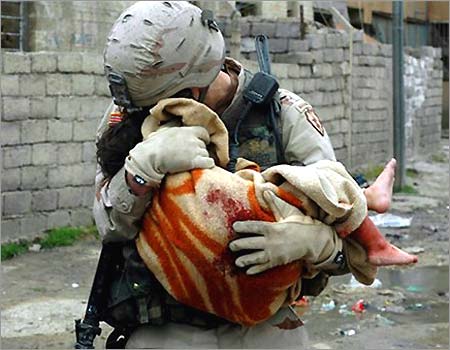
To-morrow in Melbourne, the remembrance will take a contemporary turn:  

Wednesday 28 December, 10 am – 11.30 am: Feast of Holy Innocents Peace Procession 
In the days after Christmas, while most people are recovering from the indulgence of Christmas Day or deeply immersed in the liturgy of the Boxing Day Test, the Church calendar commemorates the Holy Innocents, the children killed by Herod in a bid to maintain his power and privilege. This is a part of the Christmas story which gets little attention in churches, yet it forms a major part of the biblical birth narrative. It is a day when we remember children and other innocent people killed by today’s Herods, who consider such innocents to be acceptable collateral damage in their quest for power and security. Children are still the most deeply affected by wars around the globe – 65% of Afghans are under the age of 18. 90% of those killed in wars are civilians. Join us for a peace procession from Victoria Barracks in Melbourne to Defence Plaza. We will begin at 10 am with prayers at Victoria Barracks on St Kilda Road, and process to Defence Plaza, 661 Bourke St. Melbourne, for further prayer and reflection.
Children of war: fight, dying, surviving 

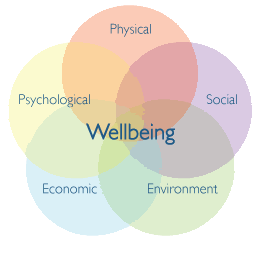
"The source of most human violence and suffering has been a hidden children's holocaust throughout history, whereby billions of innocent human beings have been routinely murdered, bound, starved, raped, mutilated, battered and tortured by their parents and other caregivers, so that they grow up as emotionally crippled adults and become vengeful time bombs who periodically restage their early traumas in sacrificial rites called wars."
- Lloyd DeMause
Hat Tip to Iain Macadair

Photobucket

Sunday, March 18, 2007

Season of the Soul: Lent 4


Lenten Theme:
What is a fool for Christ

Fool Prayer
by Beth McLean
inspired by the Ash Wednesday Liturgy
from A Prayer Book for Australia.

Lord, make me a ‘fool’ for you.
Lord of mercy and compassion, help me to see as you see.
Give me courage to stand up for justice,
to support those who are oppressed, unwanted, despised.
Help me to find you in all I meet,
let me be not afraid of derision or scorn
for your sake and for the sake of your children.
Transform me.

Readings:
Joshua 5:2-12
Psalm 32
2 Corintians 5:16-21
Luke 15:11-32

To-day's reading of the Good News of our Lord and Saviour Jesus Christ
tells the parable (story used by Jesus to teach people) of the Prodigal Son.


And he said, "There was a man who had two sons; and the younger of them said to his father, `Father, give me the share of property that falls to me.' And he divided his living between them. Not many days later, the younger son gathered all he had and took his journey into a far country, and there he squandered his property in loose living. And when he had spent everything, a great famine arose in that country, and he began to be in want. So he went and joined himself to one of the citizens of that country, who sent him into his fields to feed swine. And he would gladly have fed on the pods that the swine ate; and no one gave him anything. But when he came to himself he said, `How many of my father's hired servants have bread enough and to spare, but I perish here with hunger! I will arise and go to my father, and I will say to him, "Father, I have sinned against heaven and before you; I am no longer worthy to be called your son; treat me as one of your hired servants."' And he arose and came to his father. But while he was yet at a distance, his father saw him and had compassion, and ran and embraced him and kissed him. And the son said to him, `Father, I have sinned against heaven and before you; I am no longer worthy to be called your son.' But the father said to his servants, `Bring quickly the best robe, and put it on him; and put a ring on his hand, and shoes on his feet; and bring the fatted calf and kill it, and let us eat and make merry; for this my son was dead, and is alive again; he was lost, and is found.' And they began to make merry."Now his elder son was in the field; and as he came and drew near to the house, he heard music and dancing. And he called one of the servants and asked what this meant. And he said to him, `Your brother has come, and your father has killed the fatted calf, because he has received him safe and sound.' But he was angry and refused to go in. His father came out and entreated him, but he answered his father, `Lo, these many years I have served you, and I never disobeyed your command; yet you never gave me a kid, that I might make merry with my friends. But when this son of yours came, who has devoured your living with harlots, you killed for him the fatted calf!' And he said to him, `Son, you are always with me, and all that is mine is yours. It was fitting to make merry and be glad, for this your brother was dead, and is alive; he was lost, and is found.'"

For those interested in comparative religious studies or inter-faith dialogue, this site is interesting for its discussion of the Prodigal Son in the Christian tradition and in the Buddhist tradition. Very interesting!

Tuesday, March 13, 2007

Season of the Soul: The Pearl


The Hope Pearl, a 450-carat natural pearl that was owned by nineteenth-century gem collector Henry Phillip Hope. Loaned by Christie's. (Chip Clark / Smithsonian) Click image to enlarge.

The Pearl.

Matthew 13: 45


I know the ways of Learning; both the head
And pipes that feed the press, and make it run;
What reason has from nature borrowed,
Or of it self, like a good housewife, spun
In laws and policy; what the stars conspire,
What willing nature speaks, what forced by fire;
Both th' old discoveries, and the new-found seas,
The stock and surplus, cause and history:
All these stand open, or I have the keys:
Yet I love thee.

I know the ways of Honor, what maintains
The quick returns of courtesy and wit:
In vies of favors whether party gains,
When glory swells the heart, and molding it
To all expressions both of hand and eye,
Which on the world a true-love-knot may tie,
And bear the bundle, wheresoe'er it goes:
How many drams of spirit there must be
To sell my life unto my friends or foes:
Yet I love thee.

I know the ways of Pleasure, the sweet strains,
The lullings and the relishes of it;
The propositions of hot blood and brains;
What mirth and music mean; what love and wit
Have done these twenty hundred years, and more:
I know the projects of unbridled store:
My stuff is flesh, not brass; my senses live,
And grumble oft, that they have more in me
Than he that curbs them, being but one to five:
Yet I love thee.

I know all these, and have them in my hand:
Therefore not sealéd, but with open eyes
I fly to you, and fully understand
Both the main sale, and the commodities;
And at what rate and price I have your love;
With all the circumstances that may move:
Yet through these labyrinths, not my groveling wit,
But your silk twist let down from heaven to me,
Did both conduct and teach me, how by it
To climb to thee.

George Herbert

Saturday, March 10, 2007

Tributes for Kings: Kevin Rolly's The Stations of the Cross

Station 7 - Jesus Falls for the Second Time - Kevin Rolly

The Stations of the Cross is a very old Christian tradition. It is a meditative practice on the journey of Jesus to the Cross. Traditionally, it comprises 14 stations or places of reflection ending with the burial of Jesus in the borrowed tomb. Some modern renditions include a new Station 15 - The Resurrection.
Miss Eagle has discovered a modern reworking of The Stations: a magnificent, creative, poetic, reflective and challenging reworking. It is the work of Kevin Rolly and was performed at Asbury Theological Seminary, Kentucky, USA. Please take time for a reflective journey with Kevin Rolly and his collaborators. In the words of Kevin Rolly:
The Stations of the Cross traditionally end with the Burial in the Tomb.
We are left to contemplate the ultimate sacrifice that Jesus made and to wait in expectation of the resurrection.
This moment however is rarely depicted in art.
It is my contention that Good Friday and the Resurrection are inextricably woven together,
but in modern culture we tend to emphasize one over the other.
To dwell only in the Resurrection is to neglect the battle that was won for the sake of love.
I argue that the Resurrection loses it's deeper meaning without the believers' conscious passage through the walk to the cross and to truly know the cost of that victory.
In culture we end up with only rainbows and light which ignores the very real darkness.
We end up with kitsch.
To dwell only in Good Friday slowly leads us to feel the burden of guilt already paid for by the cross.
We are left as the the disciples were on that day...depressed and never knowing the victory.
Life is both light and dark.
But in the end it is the victory in which we are left having known the journey there.
That is the true Way of the Cross.

Tuesday, January 02, 2007

Faith: blind or certain?


In one of the Nazi death camps during the Second World War, a believer wrote on the wall:

I believe in the sun, even when it isn’t shining.

I believe in love, even when I feel it not.

I believe in God, even when He is silent.
~~~~~~~~~~~~~
Now faith is being sure of what we hope for
and certain of what we do not see.
This is what the ancients were commended for.
By faith we understand
that the universe was formed at God's command,
so that what is seen was not made out of what was visible.
Paul's Letter to the Hebrews Chapter 11 verses 1-3
~~~~~~~~~~~~~~~
Jesus said to him,
“If you can believe, all things are possible to him who believes.”
Immediately the father of the child cried out and said with tears,
“Lord, I believe; help my unbelief!”
Mark's Gospel Chaper 9 verses 23 and 24