Occupy Faith

Occupy Faith
Click thru to site

LECTIONARY

LECTIONARY
Click thru to site
Showing posts with label Quakers. Show all posts

Wednesday, March 12, 2014

Life's journey - Threads of a life #1 My not quite connectedness to Catherine de Hueck Doherty

Back in the 1970s, I was involved in anti-apartheid protests against the Springboks. That was where I first met Father Dick Buchhorn, National Chaplain of the YCW  - or, as he is known now, Richard Buchhorn. I was a young Mum living in Toowoomba with my husband two children - the third child arrived the following year. Richard introduced me to the American "Catholic Worker" and the imitative Australian journal, "The Catholic Worker" edited by Max Charlesworth.  Writer and commentator Niall Brennan who had an involvement in Christian communitarianism was a frequent contributor.  This was when I first heard of Dorothy Day, her spirituality and daring deeds in The Catholic Worker Movement.


A decade later I was immersed in the writings of Thomas Merton and William Johnston.

In reading of Thomas Merton as he sought to find a way to give expression to his God-given vocation, I recall coming across the story of Merton's friendship with Dorothy Day.  One night, in need of a bed, he put up at Dorothy Day's place.  However, Merton drew the short straw.  He had to sleep in Dorothy Day's bath tub because the only spare sleeping pace was occupied by Catherine De Hueck Doherty.

Catherine Doherty is noted for her book Christian Spirituality of the East for Western Man.  And we now switch to an Australian connection.  Back around the late 1990s when I was living in Sydney, I had a friend, a former Catholic priest. We went for a drive one day and finished up in the Goulburn area and he took me to a place which he used to visit.  We did not drop in to say hello but he just told me of his connection with this place.  The place was a former Catholic orphanage.


The story of Sue Gordon Woods is quite remarkable. She flew to Canada and met Catherine Doherty and experienced her spirituality at Madonna House.  This part of her story impresses me.  There was, it would seem, a clear sense of direction in the life of Sue at a young age.    Sue's story can be read in the Waterhole of Hope.  Here is the story of The House of Prayer - a community that was established in the old orphanage. At The House of Prayer, the community built a poustinia in the garden.

Fast forward from my Goulburn trip to 2009 and I am living in Melbourne.  I am a Quaker as well as an Anglican.  Many Quakers in Australia had longed for a study centre such as Woodbrooke in Britain and Pendle Hill in the USA. Eventually, the centre became a reality at Silver Wattle, near Bungendore in NSW which is only 45 minutes from the national capital, Canberra. 

Silver Wattle is the result of much dedication, hard work, and sacrifice from a small number of Friends.  I was the first cook at Silver Wattle.  The property belonged to the Catholic Church and had been inhabited by members of the House of Prayer community who were formerly at Goulburn.  Waterhole of Hope describes the difficulties that came upon the House of Prayer communities in later times at Goulburn.  The move to the property at Silver Wattle was planned as a transition as members of the community 'transitioned' from what once was.  As Quakers moved in, there were still members of the community residing at Silver Wattle.

I didn't know any of the House of Prayer connections until I was at Silver Wattle, met the remaining residents, and found Waterhole of Hope on the bookshelf.  And I had heard, rather vaguely, from other sources of what became of Sue Gordon Woods.  It is good to know that Sue's life goes on with a strong spirituality.  Her story continues at Campfire in the Heart near Alice Springs.
Photobucket

Monday, December 06, 2010

There is one, even Christ Jesus, that can speak to thy condition

george-fox-wp-gfdl
Precious George!

then, oh, then, I heard a voice which said,
"There is one, even Christ Jesus, that can speak to thy condition";
and when I heard it my heart did leap for joy.
Then the Lord let me see why there was none upon the earth
that could speak to my condition, namely, that I might give Him all the glory; for all are concluded under sin, and shut up in unbelief as I had been,
that Jesus Christ might have the pre-eminence who enlightens,
and gives grace, and faith, and power.
Thus when God doth work, who shall let
And this I knew experimentally.

Please go over to Hay Quaker to find out more

Tuesday, October 12, 2010

Earth Quaker Action Team: Faith, Creation, Environment


In case you hadn't noticed, Miss Eagle is a Quaker.  She attends Eastern Suburbs Local Meeting (part of Victoria Regional Meeting) in Melbourne, Victoria. I want to share with you what American Friends (Quakers are  properly known as the Religious Society of Friends) are up to.  Over at Huffington Post, Eileen Flanagan has written Quakers Advocate Living in 'Right Relationship' with Creation about the activities of Quakers on the front line of the mess which is coal-mining in Appalachia.  And we have our own coal-related messes here in Australia in the form of open-cut pit mining and coal seam gas exploration and extraction.

Unfortunately, Friends in Australia have been a bit slow in getting their collective act together and really moving their Meetings into concerted action.  Sure, there are individuals like mois and like Andrew Bray from BREAZE in Ballarat to whom I have done  a shout out on The Network.  But the powerful collective factor is absent from Australian Friends at this time - although there are stirrings across the States.

In fact, my own experience of faith and interfaith environmental groups here in Victoria is that they tend towards quietism on environmental matters or, not to put too fine a point on the matter, people of faith seem to be more inclined to the warm and fuzzy and personal with regard to the environment rather than getting stuck into the pointy end where decisions are made and decisions affected.  

At my great age and antiquity, I am hardly the essence of activism anymore.  Most - although not all - is done on my posterior in front of the computer.  I could never be the chain-myself-to-a-coal-facility person even in my more active days.  However, I have to be where the people are.  I have to be where those who are affected by poor decisions are.  I have to be adding to my knowledge of issues and people to ever press for community engagement and increased knowledge of community impacts.  And I find so few people of faith - any faith - there.

For me planet and people are an outworking of my faith and an essential part of my faith practice.  I firmly agree with Paul in his Letter to the Romans (1:20) where he says - For since the creation of the world God's invisible qualities - his eternal power and divine nature - have been clearly seen, being understood from what has been made. And if creation so manifests the qualities of its Creator, surely it behoves people of faith to sit up straight, pay attention, and plan their next activity!  In fact (I am not wanting to sound extreme here) I think the other side of the coin is that destruction of creation, in this context, is blasphemy and sacrilege.  

You can see that I don't regard my activities - simple as they are - as warm, fuzzy, personal or self-centred.  I might not always hit my target - but, from time to time, acting in concert with others we do.  And, if I/we don't?  Well, I/we are the voice/s of the prophet/s alive in the land!


The Earth Quaker Action Team is a group of people 
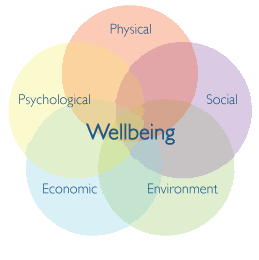
dedicated to ensuring the well-being of our planet 
by using nonviolent direct action 
to stand up against destructive and unjust practices, 
This video explains the groups mission, how it came about, 
and its BLAM (Bank Like Appalachia Matters) campaign, 
It was filmed at Appalachia Rising on 9.21.10.
Photobucket

Monday, July 12, 2010

Vale Elise Boulding: good and faithful Friend: may peace be with us because of you

Elise Boulding
Elise Boulding, 89, a sociologist who was instrumental in establishing peace studies and conflict resolution as an academic discipline, died June 24 of complications from Alzheimer's disease at a nursing home in Needham, Mass.
Dr. Boulding, a Norwegian-born Quaker, taught at the University of Colorado at Boulder before retiring from Dartmouth College in the mid-1980s. As a matriarch of the peace studies movement, she emphasized the role of women and families in creating a less violent world.

"Elise Boulding was to peace studies what Rachel Carson was to conservation and Margaret Mead to anthropology," Colman McCarthy, a peace activist and former Washington Post columnist, wrote in an e-mail. "She gave academic legitimacy to the study of pacifism as both a moral force and a practical alternative to violence -- all the way from military violence to domestic violence."

Dr. Boulding raised five children long before she entered academia, and her experience as a mother convinced her that people can be taught to wage peace just as they are taught to wage war.
Lessons learned around the dinner table and on school playgrounds inevitably mold a person's method of dealing with conflict, Dr. Boulding thought. She wrote about the importance of educating children to become diplomats instead of aggressors and also about finding ways to raise children "to be sufficiently alienated from society, so they won't accept things 'as they are.' "

"We still don't know much about producing children who will irrepressibly dream about a better society than the one we have, and obstinately work for its realization," she wrote in notes unearthed by her biographer, Mary Lee Morrison. "Most of our writing about educating children for peace is concerned with helping children to become peaceful, rather than how to spur them to the rugged, often lonely task of peacemaking."

Much of Dr. Boulding's scholarly work was grounded in what she called the underside of history -- the people and ideas that have been largely overlooked in narratives of the past. She wrote about important, little-heralded contributions by women from the Paleolithic period through modern times. As a counterpoint to studies of past wars and conflicts, she examined peaceful eras and cultures.

In her book "Cultures of Peace: The Hidden Side of History" (2000), Dr. Boulding said that peace is a daily and dynamic activity rather than a dull, static state. "Pacifism, which literally refers to the making of peace," she wrote, "is often mistakenly understood as passivism."

Elise Marie Biorn-Hansen was born July 6, 1920, in Oslo. She moved with her family to New Jersey when she was 3. Growing up, she came to know her native country through her mother's homesick tales, and she thought of it as a refuge untouched by the rest of the world's tragedies. Then Hitler's army invadedNorway in 1940.

"And that was when I realized that there was no safe place on earth," she said. "And I knew that I had found my life's mission."

She graduated from what is now Rutgers University and joined the pacifist Friends Church, where she met her future husband, Kenneth Boulding, a Quaker poet and internationally renowned economist.

As the couple moved frequently for his academic career, Dr. Boulding established an early reputation as a skilled networker. While living in Tennessee in the 1940s, she created a newsletter to connect Quakers living in the South; later, she created another newsletter to unite women against nuclear testing.

In 1949, she received a master's degree in sociology from what is now Iowa State University.
When the family settled in Ann Arbor, Mich., she worked toward a doctorate and volunteered at the University of Michigan's Center for Conflict Resolution. She recalled going through the garbage at the center to rescue letters sent by researchers detailing their work in the nascent field of peace studies.
In Dr. Boulding's hands, that correspondence became the foundation of the International Peace Research Newsletter. That publication led to the formation of the International Peace Research Association, and she served as its secretary-general.

In the late 1960s, the Boulding family moved to Boulder, where Dr. Boulding headed the Women's International League of Peace and Freedom. In 1969, when her youngest child was a teenager, she received a doctorate in sociology from the University of Michigan. She spent much of 1973 on sabbatical in an isolated mountain cabin, writing the foundation of her 1976 book "The Underside of History: A View of Women Through Time."

She taught at the University of Colorado until 1978, when she joined the faculty at Dartmouth. There, she headed the sociology department and helped establish a peace studies department. In the course of her career, she wrote numerous articles and more than 10 books.

Her husband died in 1993. Survivors include five children, Christine Boulding of Wayland, Mass., Russell Boulding of Bloomington, Ind., Mark Boulding of Englewood, Colo., Philip Boulding of Olalla, Wash., and William Boulding of Durham, N.C.; 16 grandchildren; and nine great-grandchildren.

Dr. Boulding said one of her most important tasks was challenging people in workshops held across the country to envision a world in which quarrels are settled without threats or weapons.
"We cannot achieve what we cannot imagine," she wrote.

Source from the Washington Post.

Related reading:
Cultures of Peace: The Hidden Side of History (Syracuse Studies on Peace and Conflict Resolution)

Building a Global Civic Culture: Education for an Interdependent World (Syracuse Studies on Peace and Conflict Resolution)
One Small Plot of Heaven: Reflections on Family Life by a Quaker Sociologist

From a Monastery Kitchen: A Practical Cookbook of Vegetarian Recipes for the Four Seasons Complete from Soups to Desserts with Breads

Into Full Flower: Making Peace Cultures Happen


Biography - Boulding, Elise (Biorn-Hansen) (1920-): An article from: Contemporary Authors


Photobucket